Philipp Schneider
Philipp Schneider

PhD Candidate

About Me

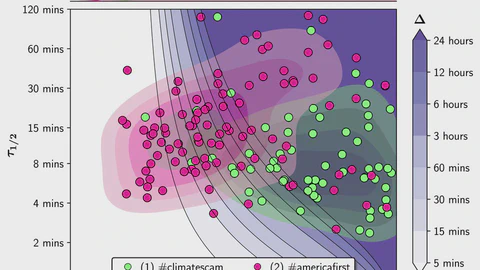
I am a PhD candidate in the Risk Analytics and Optimization Lab at EPFL, advised by Prof. Daniel Kuhn. My research lies at the intersection of operations research, machine learning, and network science. I develop mathematical models and algorithms that are calibrated on data and designed for decision environments shaped by scarcity and uncertainty. A central theme of my work is end-to-end learning, building frameworks that connect data directly to robust and implementable decisions. Current projects include modeling the spread of misinformation, detecting harmful actors, and designing intervention policies in online networks; studying supply chain finance through buyer–supplier connections; and applying machine learning to problems such as algorithmic market making.

Download CV
Interests
  • Machine Learning
  • Artificial Intelligence
  • Reinforcement Learning
  • Network Science
  • Operations Research
Education
  • PhD in Risk Analytics and Optimization

    EPFL, Lausanne, Switzerland

  • MSc in Engineering & Technology Innovation Management and Mechanical Engineering

    Carnegie Mellon University, Pittsburgh, PA

  • BSc Production Technology and Management

    Hamburg University of Applied Sciences, Hamburg, Germany
📚 My Research
My personal research journey began with the study of temporal point processes, in particular Hawkes processes (see hawkes-knowledge for an overview). These models capture arrival patterns characterized by bursts of high activity followed by inactivity, as observed in earthquakes, financial trades, or social media posts. However, because most systems are observed in discrete time — constrained by human-driven design choices or limitations of information observability — we often require different approaches to inferring and modeling complex phenomena. This challenge motivated my first paper and broadened my interest in how to move from raw data to reliable decisions. It ultimately shaped my agenda by focusing on three fundamental questions decision makers must address. First, inference — what model best describes the data? Second, prediction — how well can we anticipate the future? And third, optimization — what is the best decision to achieve the desired outcome? These challenges become even more complex in strategic settings where competitors, regulators, or malicious actors adapt their behavior in response. My work develops algorithms at the intersection of artificial intelligence, reinforcement learning, network science, and operations research to address such problems. A central theme is end-to-end learning — building scalable, constraint-aware frameworks that integrate inference, prediction, and optimization in a single pipeline. I am particularly passionate about how technological advances such as large language models (LLMs) are influencing social systems, from shaping user behavior to guiding the design of intervention policies in online platforms. By combining robustness, interpretability, and empirical performance guarantees, I aim to create decision models that are both theoretically rigorous and practically deployable across domains such as online networks, supply chain finance, and financial markets. In particular, my focus is on building systems that work in practice first, and then advancing them toward greater efficiency, scalability, and impact. If you are interested in collaborating or exploring project opportunities, I’d be glad to connect via email!
Featured Publications
Recent Publications
(2025). Efficient Best-of-Both-Worlds Algorithms for Contextual Combinatorial Semi-Bandits.
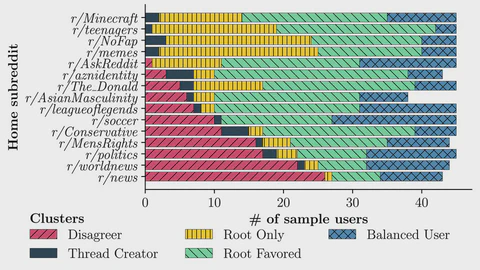
(2025). Behavioral Homophily in Social Media via Inverse Reinforcement Learning: A Reddit Case Study. In WWW ‘25.
DOI
(2023). The effectiveness of moderating harmful online content. Proceedings of the National Academy of Sciences, 120(34), e2307360120.
DOI
(2023). Estimation of self-exciting point processes from time-censored data. Physical Review E, 108, 015303.
DOI