Philipp Schneider
Philipp Schneider

PhD Candidate

About Me

I am a PhD candidate in the Risk Analytics and Optimization Lab at EPFL, advised by Prof. Daniel Kuhn. My research lies at the intersection of operations research, machine learning, and network science. I develop mathematical models and algorithms that connect data to robust, implementable decisions in environments shaped by uncertainty, strategic behavior, and complex interactions. A central theme of my work is learning from the microstructure of large-scale behavioral data: how individual actions, timing, and network connections reveal the dynamics of broader systems. Current projects include modeling the spread of misinformation, detecting harmful or coordinated actors, designing intervention policies in online networks, and applying machine learning to sequential decision problems such as algorithmic market making.

Download CV
Interests
  • Computational Social Science
  • Machine Learning
  • Artificial Intelligence
  • Reinforcement Learning
  • Network Science
  • Information Ecosystems
Education
  • PhD in Risk Analytics and Optimization

    EPFL, Lausanne, Switzerland

  • MSc in Engineering & Technology Innovation Management and Mechanical Engineering

    Carnegie Mellon University, Pittsburgh, PA

  • BSc Production Technology and Management

    Hamburg University of Applied Sciences, Hamburg, Germany
📚 My Research
My research journey began with temporal point processes—especially Hawkes processes (hawkes-knowledge), which model bursts of activity over time. This foundational work led me to a broader challenge that drives my current agenda: how do we move from noisy, discrete behavioral data to reliable models, predictions, and decisions? I study this challenge within complex social and technical systems where actions unfold over time, interact through networks, and reflect strategic incentives. In online information ecosystems and financial markets, actors post, trade, coordinate, and adapt to platform interventions. Analyzing this observable microstructure of behavior allows us to understand information flows, detect harmful or coordinated actors, and design more effective policies. Methodologically, my work bridges artificial intelligence, reinforcement learning, network science, and operations research to address three core pillars: inference (what model best describes the data?), prediction (how well can we anticipate the future?), and optimization (what is the best decision?). A central theme of my research is end-to-end learning—building scalable, constraint-aware frameworks that integrate these pillars into a single pipeline. More recently, I am exploring how large language models (LLMs) and AI agents are fundamentally altering social systems and platform dynamics. My ultimate goal is to build decision models that are theoretically rigorous yet practically deployable. If you are interested in collaborating or exploring project opportunities, I’d be glad to connect via email!
Featured Publications
Recent Publications
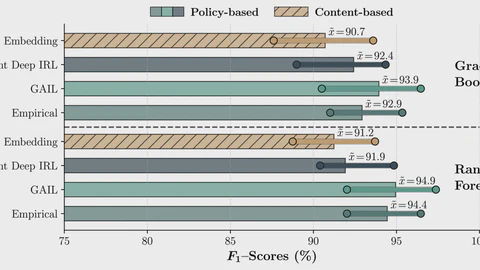
(2026). Beyond Content: Behavioral Policies Reveal Actors in Information Operations.
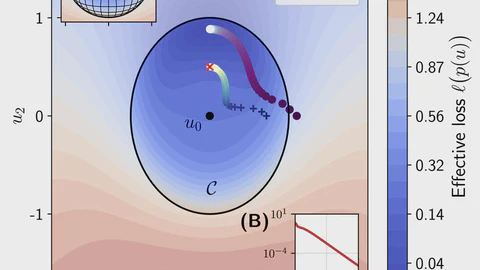
(2026). Efficient Best-of-Both-Worlds Algorithms for Contextual Combinatorial Semi-Bandits. In ICLR ‘26.
DOI
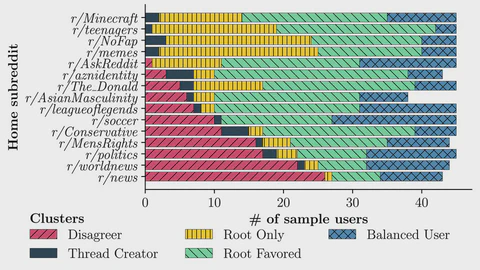
(2025). Behavioral Homophily in Social Media via Inverse Reinforcement Learning: A Reddit Case Study. In WWW ‘25.
DOI
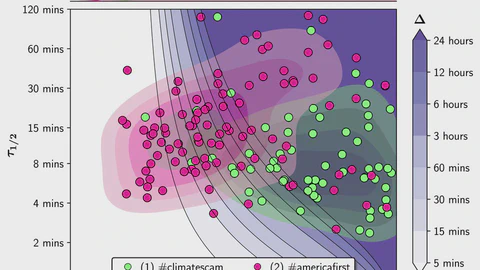
(2023). The effectiveness of moderating harmful online content. Proceedings of the National Academy of Sciences, 120(34), e2307360120.
DOI